A fontaneira 1981 portada
4
A Fontaneira 1981 Guion 22092026 scaled
A Fontaneira 1981 Guion 22092026 3 scaled

Volver

A Fontaneira 1981

For solo violin and electronics, 2026

Arte 33
Creación y Composición

Composition / Electronics

In memory of “o Cego dos Vilares”

(Duration 5’25”)

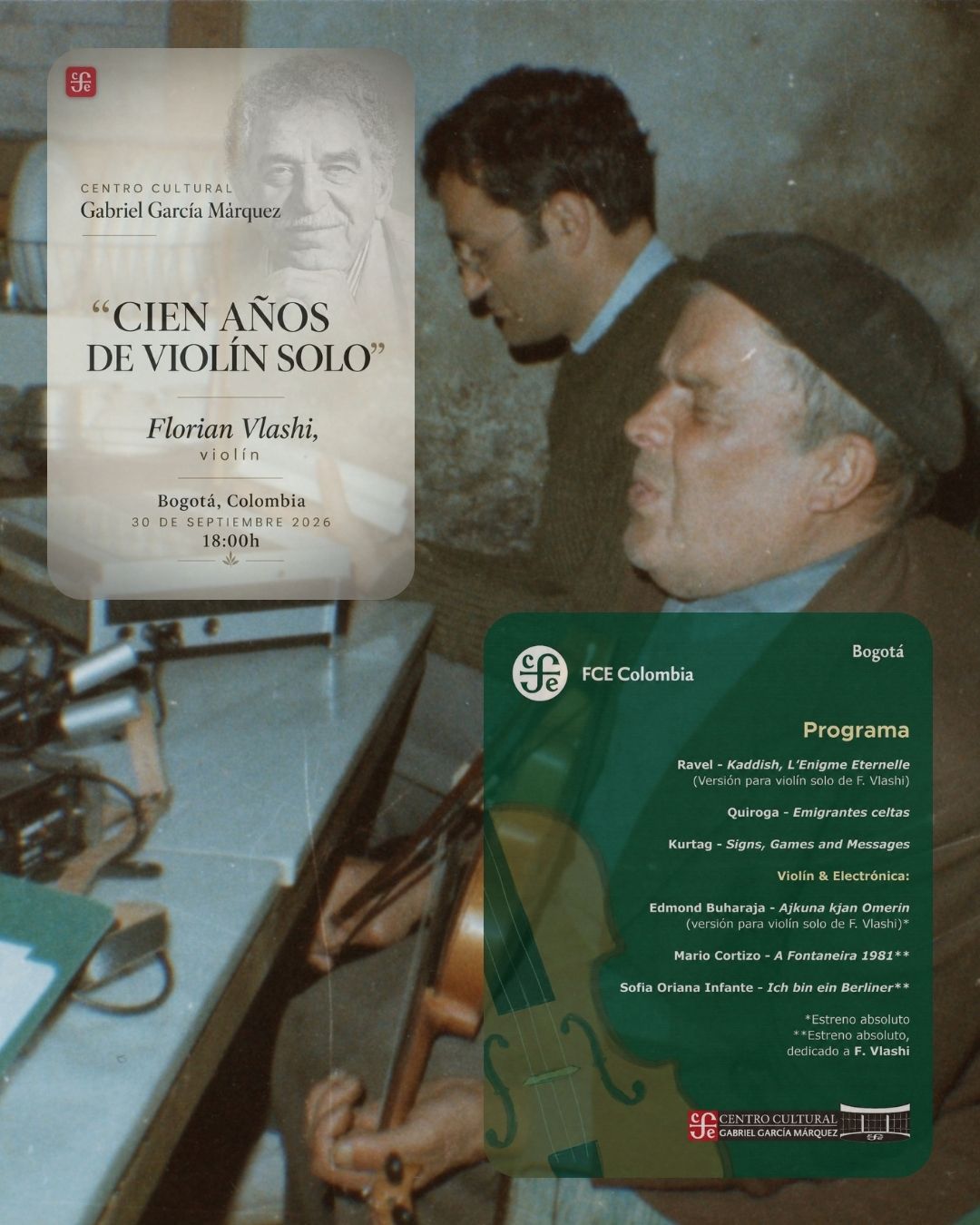
Premiered by Florian Vlashi on 30 September 2026 at the Centro Cultural Gabriel García Márquez in Bogotá, Colombia.

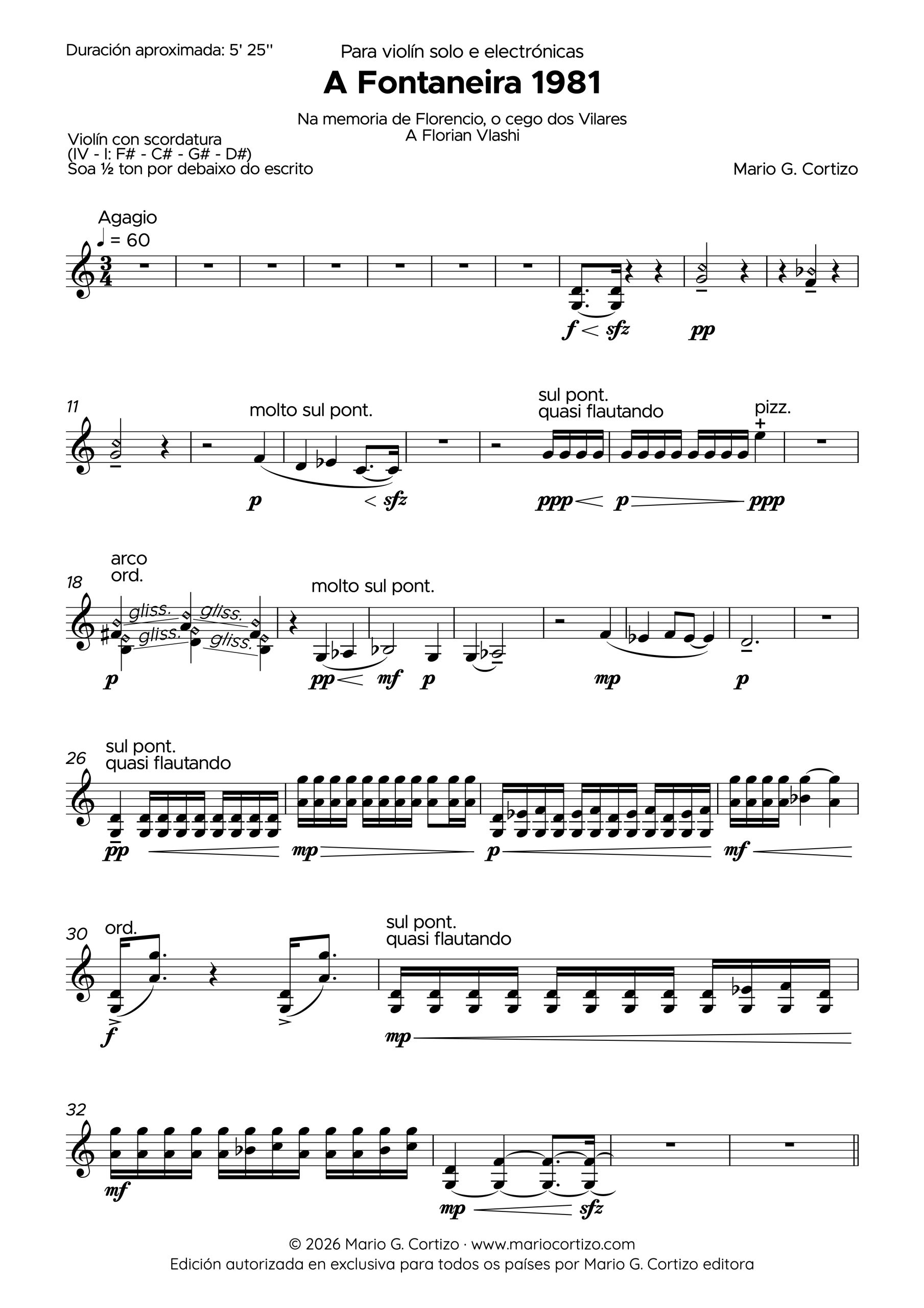
A Fontaneira 1981 grew out of a suggestion from the Albanian violinist Florian Vlashi: that I write a short piece for solo violin. After working with sound archives of Galician traditional music in pieces such as Faramontaos 1952 and As marxes, I knew I wanted to begin with the music of Florencio López Fernández, known as “o Cego dos Vilares”.

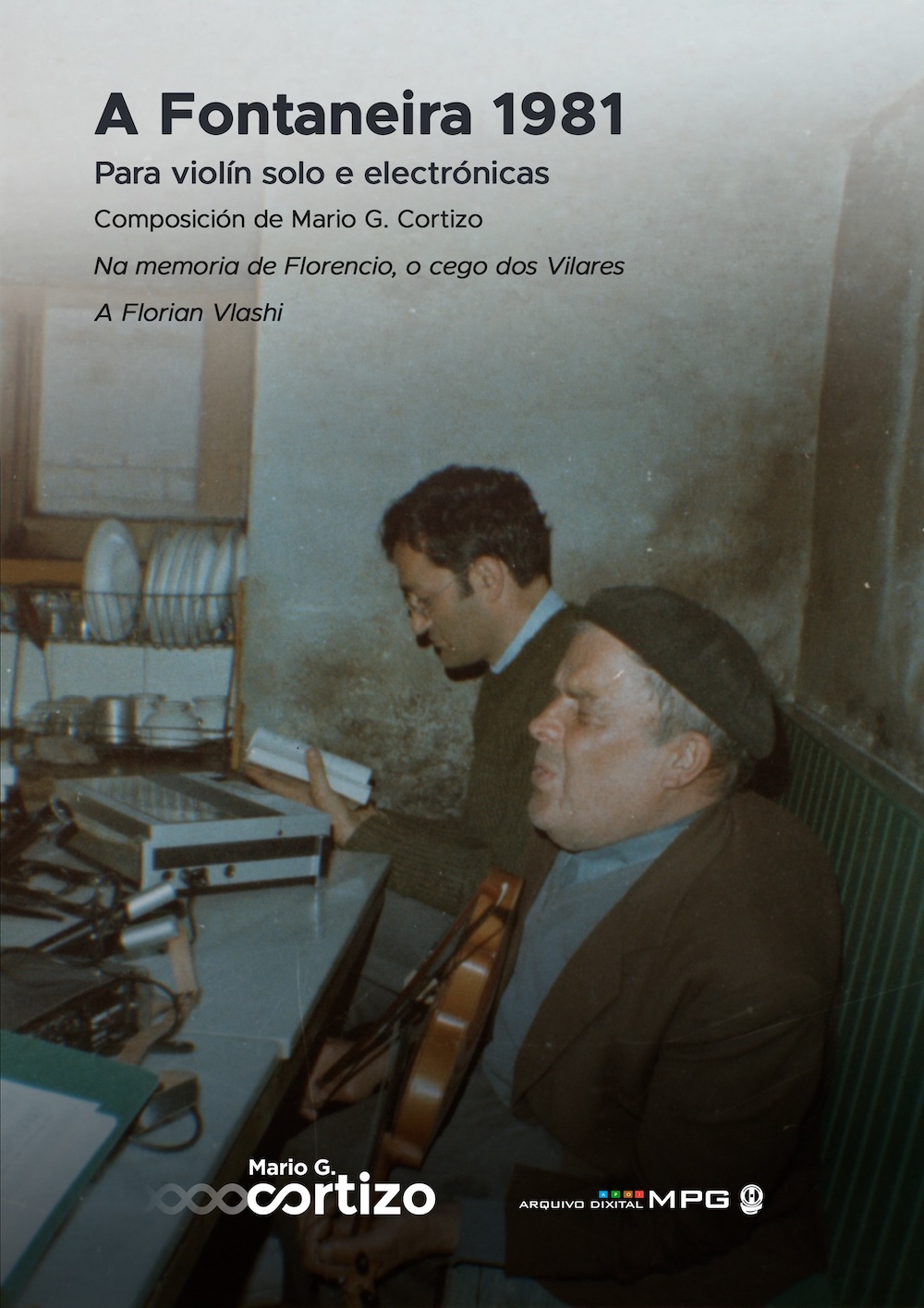
Florencio was a blind violinist and singer who spent decades travelling to fairs and towns in the mountains of Lugo. His distinctive and instantly recognisable way of playing lives on in the music of a whole generation of Galician violinists. For this piece, I focused on the recordings Dorothé Schubarth and Antón Santamarina made of him in A Fontaneira in 1981.

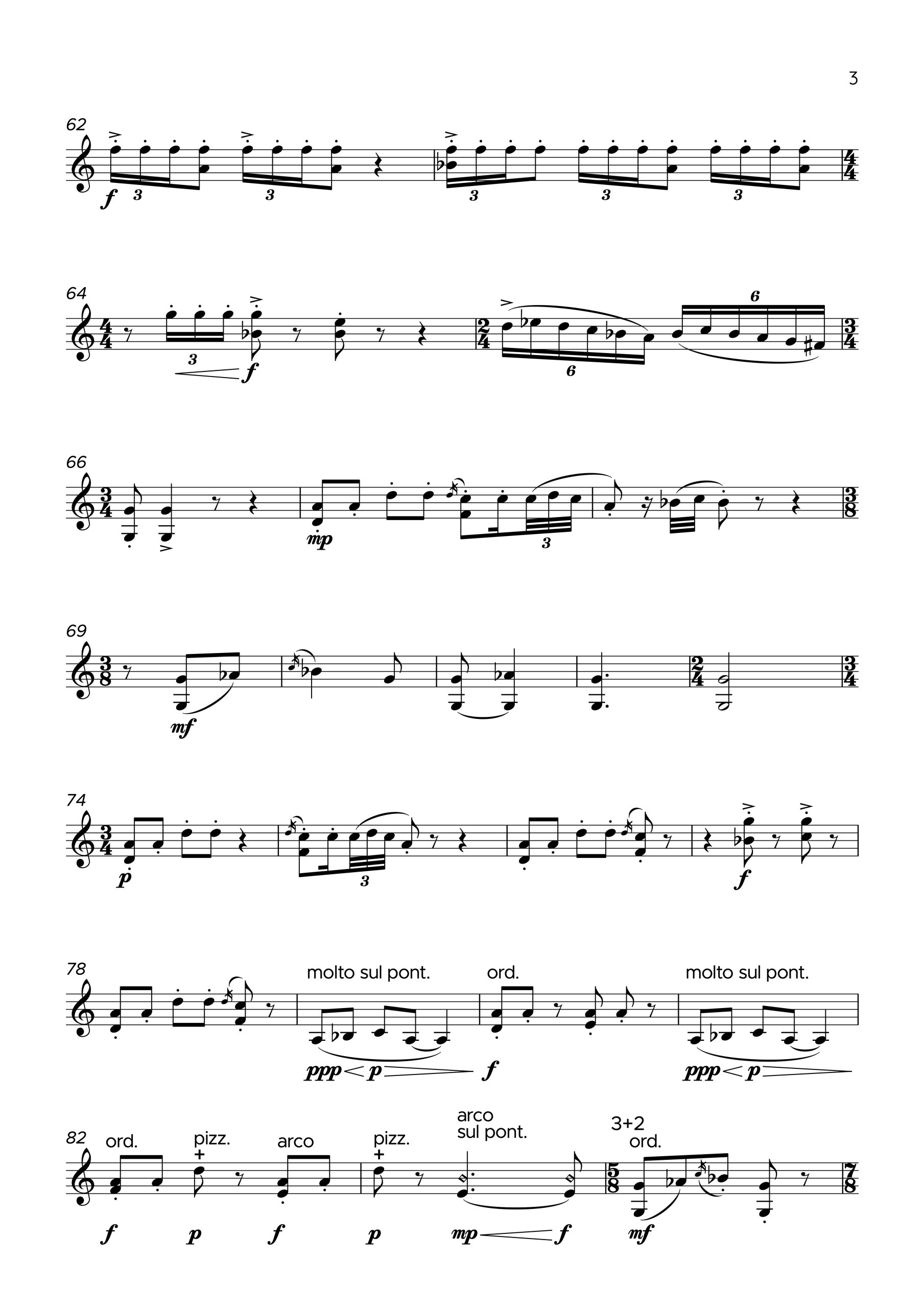
Listening closely, I became particularly interested in the technical details that give his playing its characteristic sound: his bow movements, ornamentation, open strings, and the small gestures with which Florencio begins and ends his performances. Before playing, he sometimes seems to check the tuning or string together a few notes as a prelude. These gestures appear, for example, in bars 37 and 39; bar 43 is a transcription of one of his opening phrases. At the end, he often draws the bow across all four strings, from low to high, placing one finger on the top string to form the chord G-D-A-G. This kind of signature can be heard in the upbeat to bar 110 and at the end of the piece.

In the selected recordings, the violin strings sound a semitone below their usual tuning: F#-C#-G#- D#. I decided to retain this scordatura because it is part of the particular sound of the performances from which the piece emerged. It gives the violin a slightly lower, less brilliant colour.

Taking small fragments of his musical phrases, I cut, combined and transformed Florencio’s gestures to create new material. The piece is divided into three sections, Adagio – Allegro – Andante. In the first and last, legato and sul ponticello sounds evoke the memory of his performances in an abstract, dreamlike way. The central section brings the material together in fast, virtuosic music dominated by staccato and dry bow strokes. The piece’s irregular metres come from precise rhythmic transcriptions of the selected passages. Small left-hand pizzicati and open-string double stops, so characteristic of his playing, also appear throughout the piece.

In the final section, the music modulates up a semitone, creating a sense of calm. A series of harmonies in the electronics conveys a feeling of longing: a memory of a past that is no longer with us, yet continues to accompany us as we create in the present and look towards the future.

The electronics were created from short audio samples of Florencio’s own violins. We can also hear his conversations with Dorothé Schubarth and Antón Santamarina during the recording sessions.

The piece is dedicated to my colleague Florian Vlashi. It was written in 2026, forty years after Florencio’s death and the year in which I, too, turn forty. Its premiere was scheduled for 30 September at the Gabriel García Márquez Cultural Centre in Bogotá, Colombia.

The sound materials included in this work are published courtesy of the Oral Heritage Archive of Identity (Institute of Identity Studies of the Museum of the Galician People), which houses the Schubarth-Santamarina collection to which the recordings belong.

In memory of “o Cego dos Vilares”

(Duration 5’25”)

Premiered by Florian Vlashi on 30 September 2026 at the Centro Cultural Gabriel García Márquez in Bogotá, Colombia.

A Fontaneira 1981 grew out of a suggestion from the Albanian violinist Florian Vlashi: that I write a short piece for solo violin. After working with sound archives of Galician traditional music in pieces such as Faramontaos 1952 and As marxes, I knew I wanted to begin with the music of Florencio López Fernández, known as “o Cego dos Vilares”.

Florencio was a blind violinist and singer who spent decades travelling to fairs and towns in the mountains of Lugo. His distinctive and instantly recognisable way of playing lives on in the music of a whole generation of Galician violinists. For this piece, I focused on the recordings Dorothé Schubarth and Antón Santamarina made of him in A Fontaneira in 1981.

Listening closely, I became particularly interested in the technical details that give his playing its characteristic sound: his bow movements, ornamentation, open strings, and the small gestures with which Florencio begins and ends his performances. Before playing, he sometimes seems to check the tuning or string together a few notes as a prelude. These gestures appear, for example, in bars 37 and 39; bar 43 is a transcription of one of his opening phrases. At the end, he often draws the bow across all four strings, from low to high, placing one finger on the top string to form the chord G-D-A-G. This kind of signature can be heard in the upbeat to bar 110 and at the end of the piece.

In the selected recordings, the violin strings sound a semitone below their usual tuning: F#-C#-G#- D#. I decided to retain this scordatura because it is part of the particular sound of the performances from which the piece emerged. It gives the violin a slightly lower, less brilliant colour.

Taking small fragments of his musical phrases, I cut, combined and transformed Florencio’s gestures to create new material. The piece is divided into three sections, Adagio – Allegro – Andante. In the first and last, legato and sul ponticello sounds evoke the memory of his performances in an abstract, dreamlike way. The central section brings the material together in fast, virtuosic music dominated by staccato and dry bow strokes. The piece’s irregular metres come from precise rhythmic transcriptions of the selected passages. Small left-hand pizzicati and open-string double stops, so characteristic of his playing, also appear throughout the piece.

In the final section, the music modulates up a semitone, creating a sense of calm. A series of harmonies in the electronics conveys a feeling of longing: a memory of a past that is no longer with us, yet continues to accompany us as we create in the present and look towards the future.

The electronics were created from short audio samples of Florencio’s own violins. We can also hear his conversations with Dorothé Schubarth and Antón Santamarina during the recording sessions.

The piece is dedicated to my colleague Florian Vlashi. It was written in 2026, forty years after Florencio’s death and the year in which I, too, turn forty. Its premiere was scheduled for 30 September at the Gabriel García Márquez Cultural Centre in Bogotá, Colombia.

The sound materials included in this work are published courtesy of the Oral Heritage Archive of Identity (Institute of Identity Studies of the Museum of the Galician People), which houses the Schubarth-Santamarina collection to which the recordings belong.
Ver más

Ver menos

Volver

RESPETAMOS TU PRIVACIDAD

Utilizamos cookies para mejorar tu experiencia de navegación, personalizar contenido y mostrar anuncios relevantes. Al hacer clic en Aceptar todo, aceptas el uso de cookies. Puedes obtener más información en nuestra Política de cookies y configurar tus preferencias pulsando en Configurar cookies